IFX-012 · 12 in skillet · Stir-fry
Fried rice in a 12 in skillet: 500 °F surface against a crowded pan
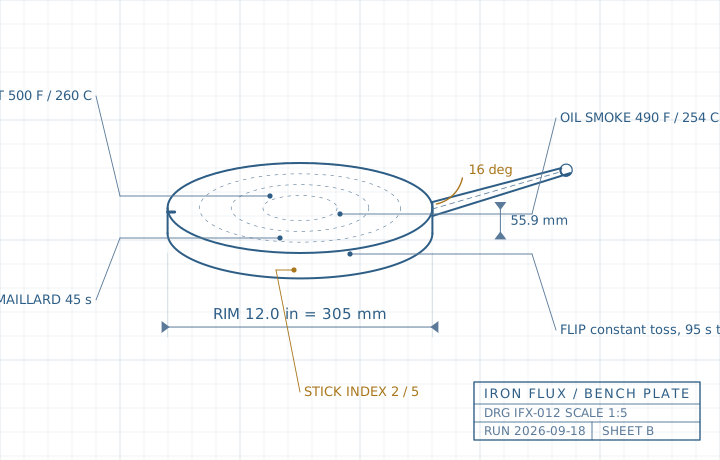
Cast iron is not a wok: it is heavier, slower to respond and flat on the bottom. What it does have is thermal mass, and this run tested whether that is enough for fried rice if the pan is never crowded.
01Abstract
Cold day-old jasmine rice, 500 g total, was stir-fried in a 12 in skillet preheated to 500 °F. The first batch used 250 g of rice at a time, the second used all 500 g at once. Pan temperature was logged every 20 seconds. The split batch held between 430 and 470 °F and developed toasted grain edges in 95 seconds; the single batch fell to 310 °F in 40 seconds and steamed instead of frying.
02Variables
Independent
- Batch size: 250 g of rice per batch or 500 g at once
- Rice temperature: fridge-cold overnight rice versus room-temperature rice
Held constant
- Pan: 12 in bare cast iron, 8 min preheat to 500 °F, 2 tsp rice bran oil
- Rice: day-old jasmine, 500 g total, broken up by hand, no clumps
- Aromatics: 2 spring onions, 1 clove garlic, added in the last 30 s
- Seasoning: 15 ml light soy, 5 ml sesame oil, off the heat at the end
- Toss frequency: every 5 s with a flat spatula, 95 s total pan time
Hypothesis A 12 in skillet at 500 °F with day-old rice can produce the same toasted, slightly smoky note a carbon-steel wok gives, as long as the pan is not crowded.
03Process
- Break the cold rice up by hand so no grain clump survives; a clump steams and stays white.
- Preheat the empty skillet 8 minutes to 500 °F, then add 2 tsp rice bran oil and swirl once. The oil should shimmer, not smoke hard.
- Add half the rice and start tossing every 5 seconds with a flat spatula, pressing clumps apart against the pan.
- At 70 seconds add the aromatics; at 95 seconds take the pan off the heat and season with soy and sesame oil.
- Wipe the pan with a paper towel and let it recover for 90 seconds before the second batch — this recovery time is the whole reason for splitting the rice.
04Observations
- Split batch: the pan fell from 500 to 430 °F in the first 20 seconds and stayed between 430 and 470 °F; grains toasted to a light brown at the edges and stayed separate.
- Single batch: the pan fell to 310 °F within 40 seconds and never recovered above 340 °F; the rice clumped and the finished dish smelled of steam, not of the pan.
- Rice straight from the fridge gave discrete grains; rice left at room temperature for an hour stuck together in the pan and released water on contact.
- The 2 tsp of oil was enough to coat 250 g of rice; with 500 g in the pan the same oil left dry patches where grains scorched black.
- A faint smoky note appeared only in the split batch, in the last 20 seconds, which is the point at which the pan came closest to wok temperature.
Instrument log
| Batch | At 20 s | At 40 s | At 95 s | Result |
|---|---|---|---|---|
| 250 g | 430 °F | 445 °F | 470 °F | separate grains, toasted edges |
| 500 g | 310 °F | 305 °F | 320 °F | clumped, steamed, pale |
| 250 g, room-temp rice | 425 °F | 440 °F | 455 °F | sticky, wet pan surface |
05Conclusion
A 12 in skillet can fry rice well if you respect its one limit: it recovers heat slowly, so it cannot take a full load. Keep batches to 250 g, wipe the pan and give it 90 seconds between them, and use rice that has been in the fridge overnight. Under those conditions the iron behaves: 430 to 470 °F through the cook, toasted grain edges at 95 seconds, and a faint smoky top note that a wok gives you for free.
Terms used
- Maillard reaction — The browning that happens when amino acids and reducing sugars react above roughly 140 °C. It is not caramelisation (which…
- Smoke point — The temperature at which a fat breaks down visibly and starts giving off acrid volatiles. Refined oils sit higher (rice bran…
- Heat capacity — How much heat a pan stores. Cast iron stores far more per litre than aluminium, so it holds temperature when food goes in, but it…